Planning a Tsavo safari from Nairobi often starts with a map that makes the park look close. The red-earth plains and elephant herds are real, but so is the distance. Here is how to plan the trip honestly, with routes, timing, and costs that match the way Kenya travel actually works.
How far is Tsavo from Nairobi and how do you get there?
Tsavo is roughly 230 to 333 kilometres from Nairobi, depending on the park and gate. The road journey usually takes four to six hours via the Nairobi-Mombasa highway. Nairobi travellers typically enter Tsavo West through Mtito Andei or Tsavo East through Voi or Manyani. Flights from Wilson Airport are faster but cost more.
The Nairobi-Mombasa highway is in reasonable condition for most of the route, but allow extra time for truck traffic, roadworks, and bathroom stops. If you travel during the rains, read our Kenya safari rainy-season road advice before you set out.
The table below compares the main access options from Nairobi.
| Option | Typical travel time | Indicative cost level | Notes |
|---|---|---|---|
| Road (self-drive or vehicle) | 4 to 6 hours | Low to moderate | Most flexible, but depends on traffic and gate choice |
| SGR train to Voi | 4 to 5 hours plus transfers | Low to moderate | Comfortable, but you still need a vehicle from the station |
| Scheduled flight from Wilson | Around 2 hours including stops | High | Lands at Tsavo airstrips; cost varies by route |
SGR trains run most days, while scheduled flights from Wilson to Kilaguni or Tsavo airstrips can cut travel time dramatically. The right choice depends on budget and whether you want a road safari atmosphere from the start.
Should you visit Tsavo East, Tsavo West, or both?
Choose Tsavo East for expansive red-dust plains, large elephant herds, the Galana River, and Aruba Dam. Choose Tsavo West for volcanic hills, lava fields, Mzima Springs, and denser scenery. Visiting both gives the broadest experience, but it requires at least two nights because the parks are large and travel between circuits reduces game-drive time.
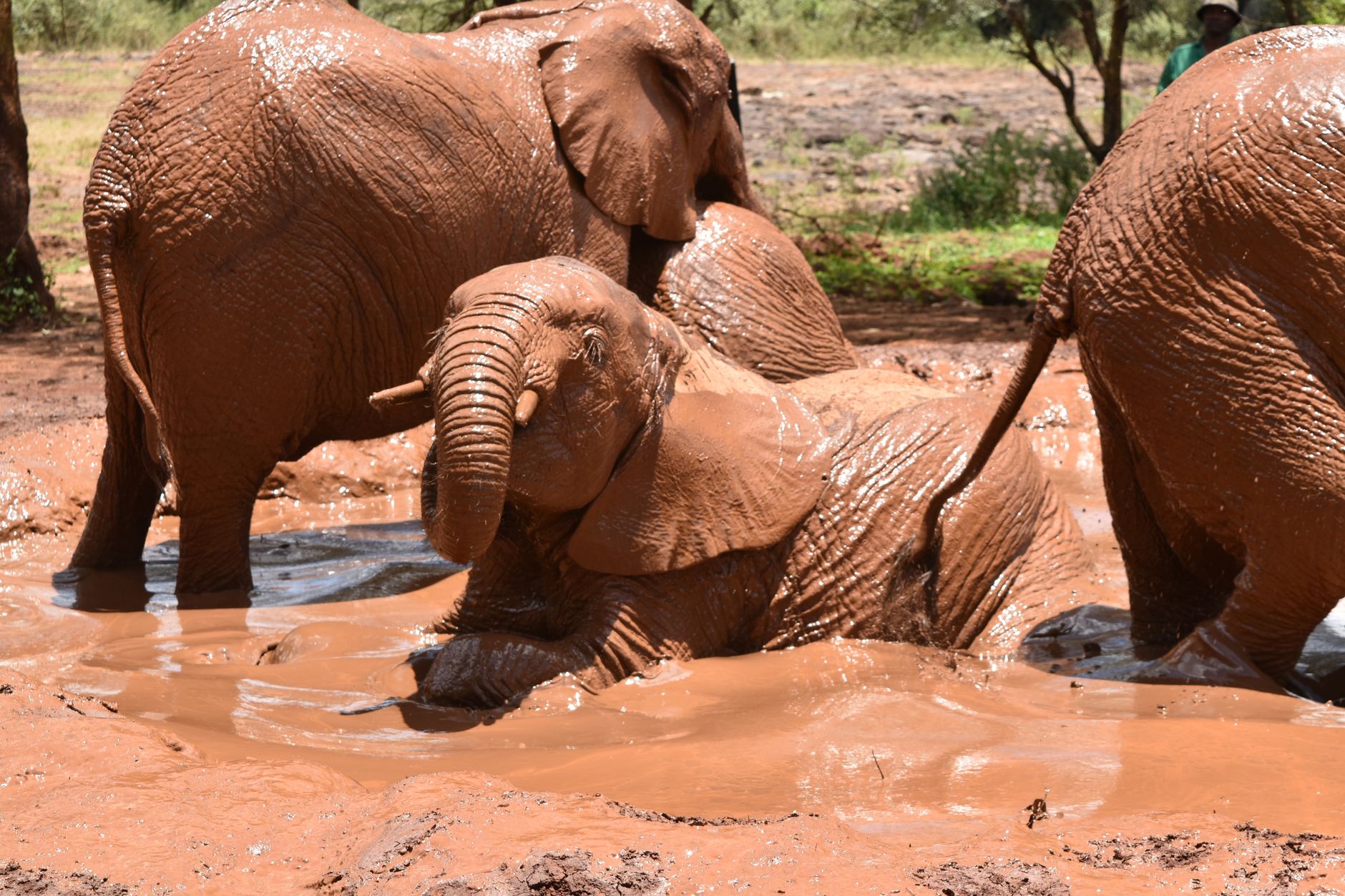
Tsavo East is flatter and drier. Its elephants are famous for rolling in iron-rich dust, which gives them a rusty colour. This is the classic image of the “red elephants” of Kenya. Tsavo West is hillier, with the springs at Mzima and views from Ngulia.
If you have only two days, one park is enough. With three days, you can split time between East and West, but be realistic about transfers. Moving between the two parks can cost you a full morning or afternoon. For a broader look at both parks, see our Tsavo safari guide.
How many days do you need for a Tsavo safari from Nairobi?
One night and two days is the practical minimum for a Tsavo safari from Nairobi, while three days and two nights provides a better balance of travel and wildlife. A one-day round trip is technically possible, but the long road journey leaves only a few hours for game drives. Two or three nights suit most visitors.
If your only window is one day, it can be done, but you will spend more time on the highway than on the game-drive tracks. A two-day itinerary with one night lets you arrive in time for an afternoon drive and leave after a morning drive. Three days gives you a full middle day and the option to visit both parks.
For most first-time safari planners, the sweet spot is a three-day, two-night itinerary. It fits neatly into a longer Kenya circuit, whether you are heading toward the coast or looping back to Nairobi.
What wildlife can you see on a Tsavo safari?
Tsavo is especially known for large herds of elephants coated in red dust, as well as lions, leopards, buffalo, giraffes, zebras, hippos, crocodiles, hyenas, antelope, and abundant birdlife. Sightings are never guaranteed. Dry-season water sources can improve viewing, while the park’s size and thick vegetation in parts of Tsavo West make patient, early game drives essential.
Go to Aruba Dam in Tsavo East and the Galana River for elephants and waterbirds. In Tsavo West, Mzima Springs has underwater viewing hides where hippos and crocodiles appear close up. Ngulia is a strong rhino area, though the Rhino Sanctuary is not an open wilderness and visits are controlled. Predators are easier to find in the dry season because their prey stays near permanent water.
For a full day out, bring plenty of memory cards and spare batteries. Most lodges have charging points, but if you are on a tight schedule, check our tips on keeping camera batteries charged on safari.
What is the best time to visit Tsavo from Nairobi?
June to October is generally the easiest period for wildlife viewing. Dry conditions concentrate animals around reliable water sources such as Aruba Dam, the Galana River, and Mzima Springs. January and February can also offer relatively dry conditions. Wet-season travel brings greener scenery, fewer visitors, and value advantages, but heavy rain can slow roads and make some tracks difficult.
The long rainy season from March to May can make some tracks sticky and river crossings risky. The short rains in November often produce afternoon showers but rarely close the main circuits. For photography and comfort, June to August has mild temperatures and less haze than October.
If your schedule is fixed, do not rule out a Tsavo trip in the wet season. You may have the park almost to yourself, and the price can be lower. Just build in extra driving time and stay flexible.
How much does a Tsavo safari from Nairobi cost?
The price depends on park fees, vehicle type, accommodation, group size, and whether the itinerary covers one park or both. Published 3-day operator packages from Nairobi often start in the range of KES 25,000 to 35,000 per person, roughly USD 195 to 275. Private and luxury safaris cost substantially more. Park entry, meals, lodging, game drives, transfers, and optional activities should always be checked separately. For a wider breakdown of what drives the total, see our guide to Kenya safari costs.
That starting range usually means a group safari in basic lodging with a shared vehicle. A private vehicle, a lodge with a pool, or a safari covering both East and West will push the price up. Park entry fees are charged per day and often appear in the package, but confirm they are included before you pay.
The table below gives a broad sense of package levels for 2026.
| Package type | Indicative price per person | What it usually includes |
|---|---|---|
| Budget 2-day group safari | KES 18,000 to 25,000 (USD 140 to 200) | Shared vehicle, basic lodge or camp, meals, park entry |
| Standard 3-day group safari | KES 25,000 to 55,000 (USD 195 to 430) | Group or private vehicle, mid-range lodge, meals, park entry |
| Premium 3-day private safari | USD 500 to 900 | Private vehicle, upmarket lodge or camp, full board, sometimes flights |
Rates change, so treat these as starting points. Before paying a deposit, run through the checks before booking a Kenya safari direct or through an agent.
Where should you stay in Tsavo?
Stay near the circuit that matters most. Voi-area lodges and camps work well for Tsavo East, while Kilaguni, Ngulia, Severin, and Finch Hattons suit Tsavo West itineraries. A lodge near a gate reduces transfer time, but a property inside or deeper in the park can provide earlier access to wildlife areas. Confirm the exact accommodation rather than accepting “or similar.”
In Tsavo East, Voi Safari Lodge has a long track record, and several established tented camps operate near the Voi gate. In Tsavo West, Kilaguni is known for its waterhole views and Ngulia for its rhino programme. Finch Hattons offers a luxury feel, while Severin Safari Camp provides a more classic tented stay. Book early in peak season.
If you plan to combine a Tsavo trip with the coast, Diani Beach is often tagged onto the end of the safari. That can be a smart way to balance wildlife with beach time.
Can you take a day trip to Tsavo from Nairobi?
A day trip is possible, but it is rarely the best use of time because the drive can take four to six hours each way. A one-day product may provide about five to six hours of game viewing before the return journey. An overnight safari creates space for sunrise and afternoon drives, when wildlife activity and photographic light are better.
If you cannot stay overnight, start before 6 a.m. from Nairobi, enter at the closest gate, and hire a guide who knows the shortcuts. You will still miss the early morning peak in the park. A Tsavo National Park day trip works best when you are already staying near Voi or the coast.
For most travellers coming from Nairobi, a one-night stay is the smarter plan. You wake up inside the park and get two proper game drives instead of one long, rushed day.
Frequently Asked Questions
How far is Tsavo from Nairobi?
Tsavo is about 230 to 333 kilometres from Nairobi, depending on the park and gate. By road, the journey generally takes four to six hours along the Nairobi-Mombasa highway.
Can you do a Tsavo safari from Nairobi in one day?
Yes, but it is a rushed option. The round trip can consume most of the day, leaving roughly five to six hours for game viewing. One night in or near the park is a better choice for most travellers.
Which is better Tsavo East or Tsavo West?
Tsavo East is better for wide red-earth plains and large elephant herds, while Tsavo West offers volcanic scenery, Mzima Springs, and more varied terrain. Choose both if the itinerary allows at least two nights.
How much does a Tsavo safari from Nairobi cost?
Published 3-day packages often start in the range of KES 25,000 to 35,000, roughly USD 195 to 275, per person. Private vehicles, higher-end camps, park fees, and room upgrades increase the total. Always confirm what the quoted price includes.
What is the best time to visit Tsavo National Park?
June to October is a reliable period for wildlife viewing because animals often gather near permanent water. The rainy seasons offer greener landscapes and fewer visitors, but wet roads can lengthen transfers and restrict some game-drive routes.
Where can you find good Tsavo safari packages?
When you are ready to plan a Tsavo safari from Nairobi, the smartest move is to compare safari operators and browse packages. FindMySafari, Valley Safaris, and Trunktrails Safaris all offer Tsavo itineraries from Nairobi with clear inclusions. That gives you a solid baseline for price, quality, and what matters most to you before you commit.
Where can you find more safari planning resources?
- Tsavo East and West map from SafariPure
- Best time to visit Kenya from Trunktrails Safaris
- Map of Tsavo from Valley Safaris
- Tsavo destination guide on FindMySafari